

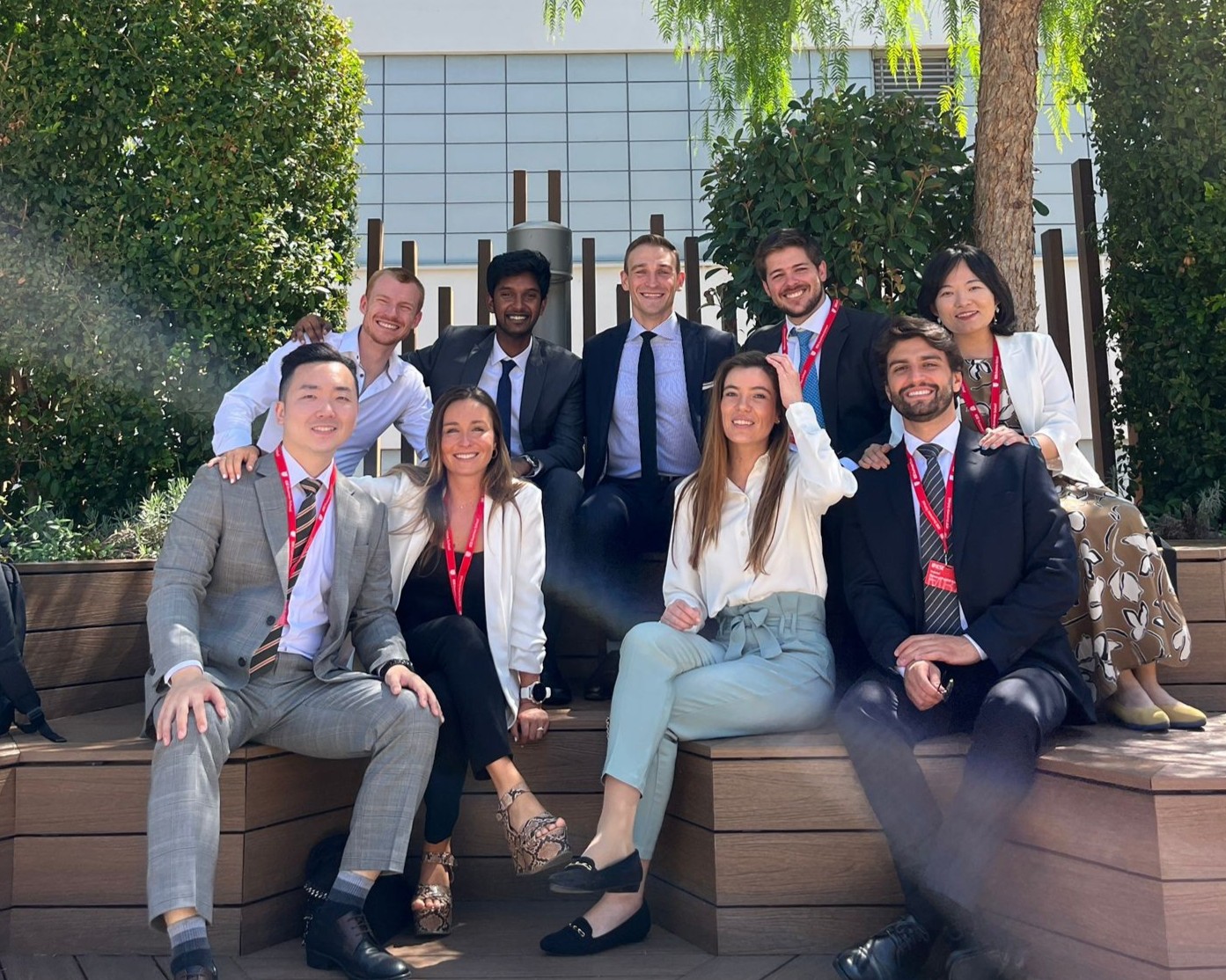
Could you tell us a little about yourself, your background, and what you are doing now.
I joined Korea Asset Management Corporation (KAMCO), a public asset management institution in Korea, in 2013. Over more than a decade, I had the opportunity to work across several different departments and areas of the organization. My experience has ranged from managing system development projects and IT-related contracts to working on state-owned land, listed securities, non-performing loans and debt restructuring. I also worked at a regional headquarters, where I gained a broader understanding of how our field offices operate. These experiences allowed me to see KAMCO from different angles, from technology and operations to public asset management and supporting people facing financial difficulties.
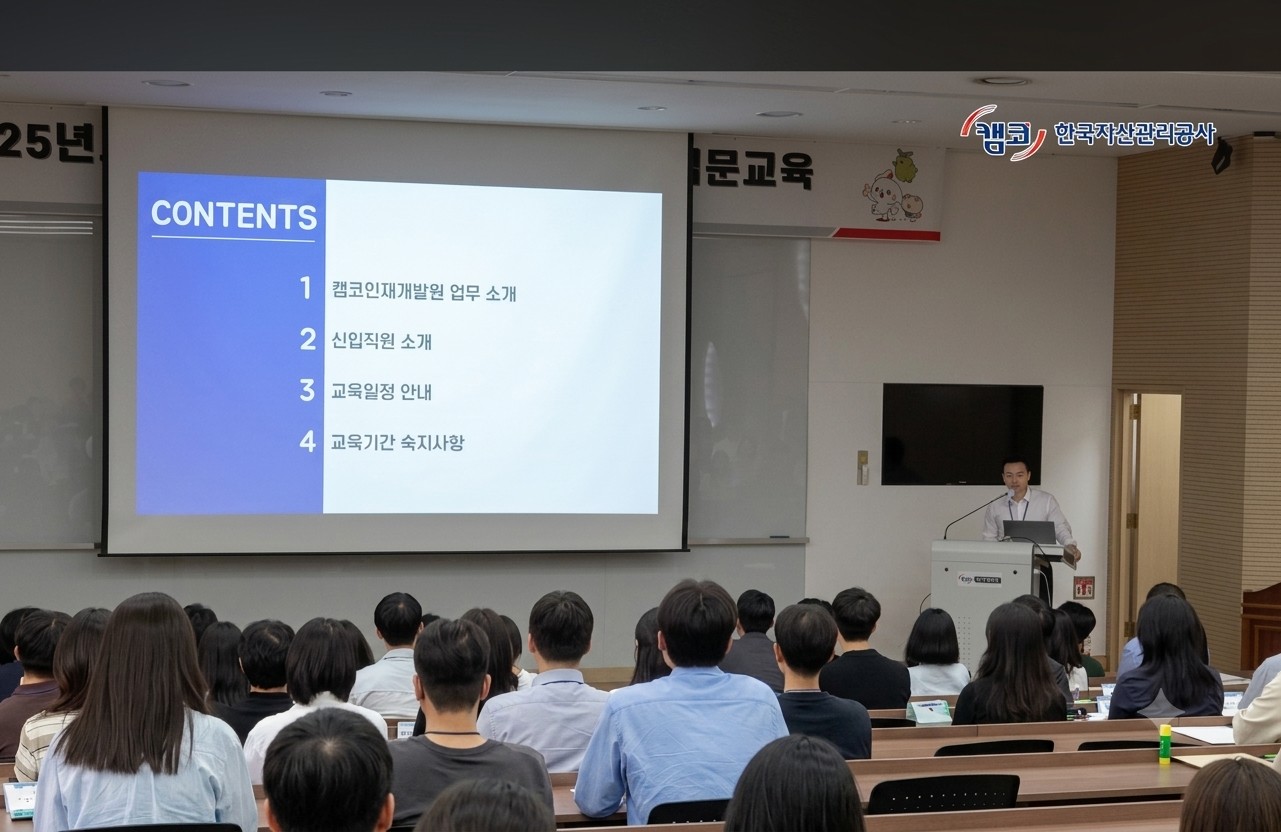
Leading a four-week training program for 111 new employees, supporting their first steps in their careers at KAMCO.
In 2023, I left Korea to begin my MBA at IESE Business School as a company-sponsored candidate. I graduated in May 2025 and returned to KAMCO shortly afterwards. Unlike many of my classmates, I always knew where I would go after graduation. I was not preparing for a job search or a career change. I was preparing to return to the same organization, but hopefully with a broader understanding of my work and the world around it.
After returning to KAMCO, I joined the Human Resources Development Institute, where I worked on developing and nurturing talent, including organizing training programs for new employees and other internal and external educational programs. I worked there for about ten months before another important chapter of my life began. My son was born in March 2026, and I am currently on parental leave.
What inspired you to pursue an MBA, and why did you choose IESE?
After more than ten years at KAMCO, I had developed strong practical experience, but I also became increasingly curious about the bigger picture. Fortunately, I was selected by KAMCO for an overseas education program, which gave me the opportunity to step outside my usual working environment and pursue further studies abroad.
I chose an MBA because I wanted to understand how different parts of a business come together when managers make decisions. I wanted to connect the practical experience I already had with broader knowledge of finance, strategy, operations, economics, analytics and people. In that sense, I did not need an MBA to change my job. I needed an MBA to change my perspective.
IESE was particularly attractive because of its case method and strong focus on general management. Rather than simply learning theories, we were constantly asked to make decisions with incomplete information and defend our views in front of classmates with completely different backgrounds. That environment pushed me to think beyond what I already knew. Another reason I chose IESE was the opportunity to learn Spanish. Learning languages is one of my favorite hobbies, and living in Barcelona gave me the chance to learn Spanish while experiencing the local culture. For me, it became a particularly enjoyable part of the international experience.
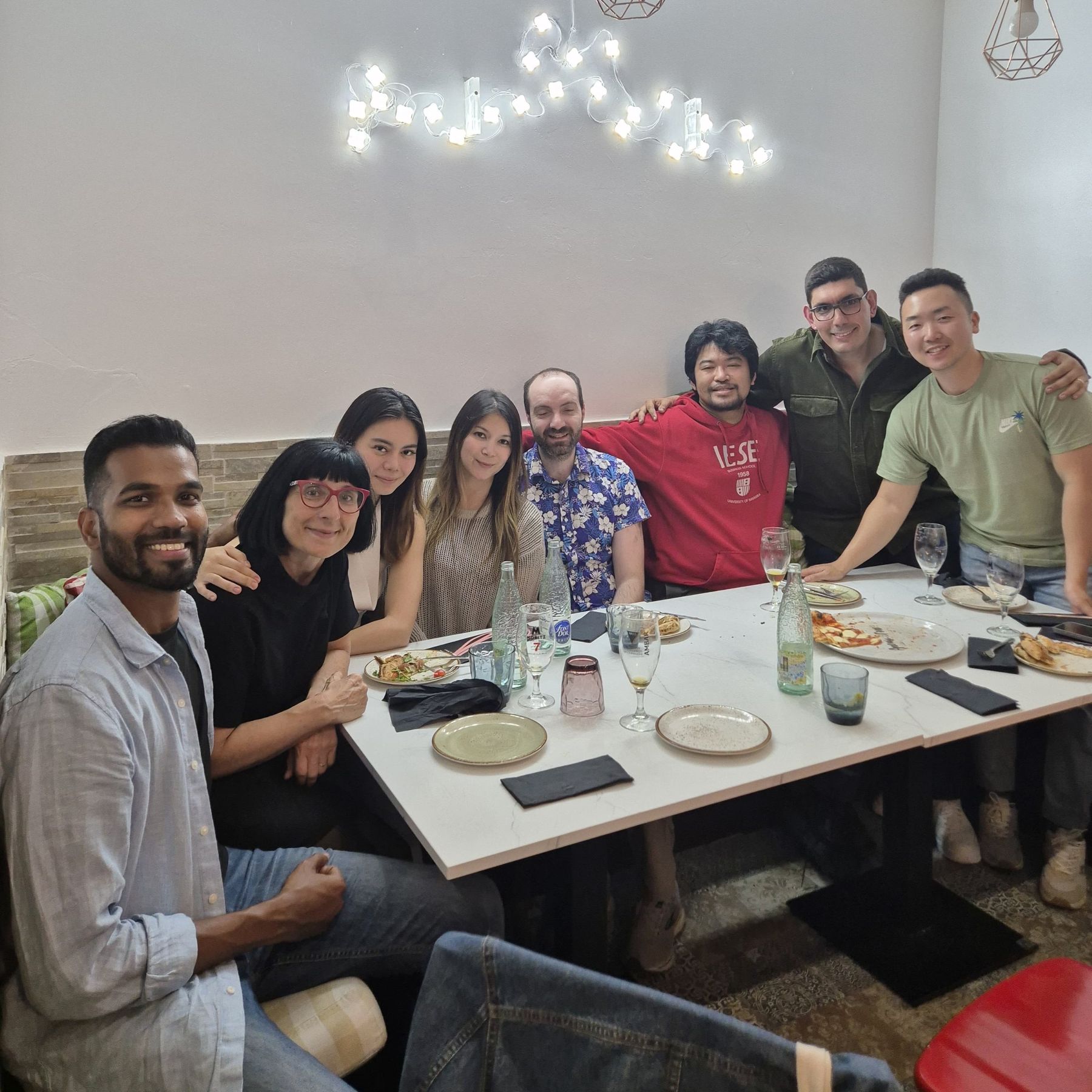
One of my favorite IESE experiences: learning Business Spanish while getting to know the local culture and life in Barcelona.
How did you maximize your MBA experience knowing that you would return to your organization?
Knowing that I would return to KAMCO actually influenced how I approached the MBA.
I did not have to spend significant time preparing for recruitment, so I could focus more deliberately on exploring areas that were outside my previous experience. Rather than choosing only subjects that were directly related to my existing responsibilities, I tried to build a broader business toolkit.
The variety of the MBA curriculum was particularly valuable. I was able to study areas that I had not encountered systematically in my career and then consider how those concepts might apply to KAMCO.
One example was operations and business process optimization. I had managed projects and worked with business processes for many years, but I had never formally learned how to analyze a process, identify bottlenecks and inefficiencies, and redesign it to improve overall performance. Learning to look at a process as a whole changed the way I thought about some of the work I had previously taken for granted. I began to consider where unnecessary steps could be removed, how resources could be used more effectively, and how processes could ultimately create more value.
The New York International Module was another valuable academic experience. It gave me the opportunity to learn about current trends in global finance and to see financial markets from a different angle. I was also fortunate enough to be in the United States on Election Day. Experiencing such an important political moment while studying the country’s economy and financial system was unforgettable. It reminded me that financial markets and business decisions are closely connected to politics and society.
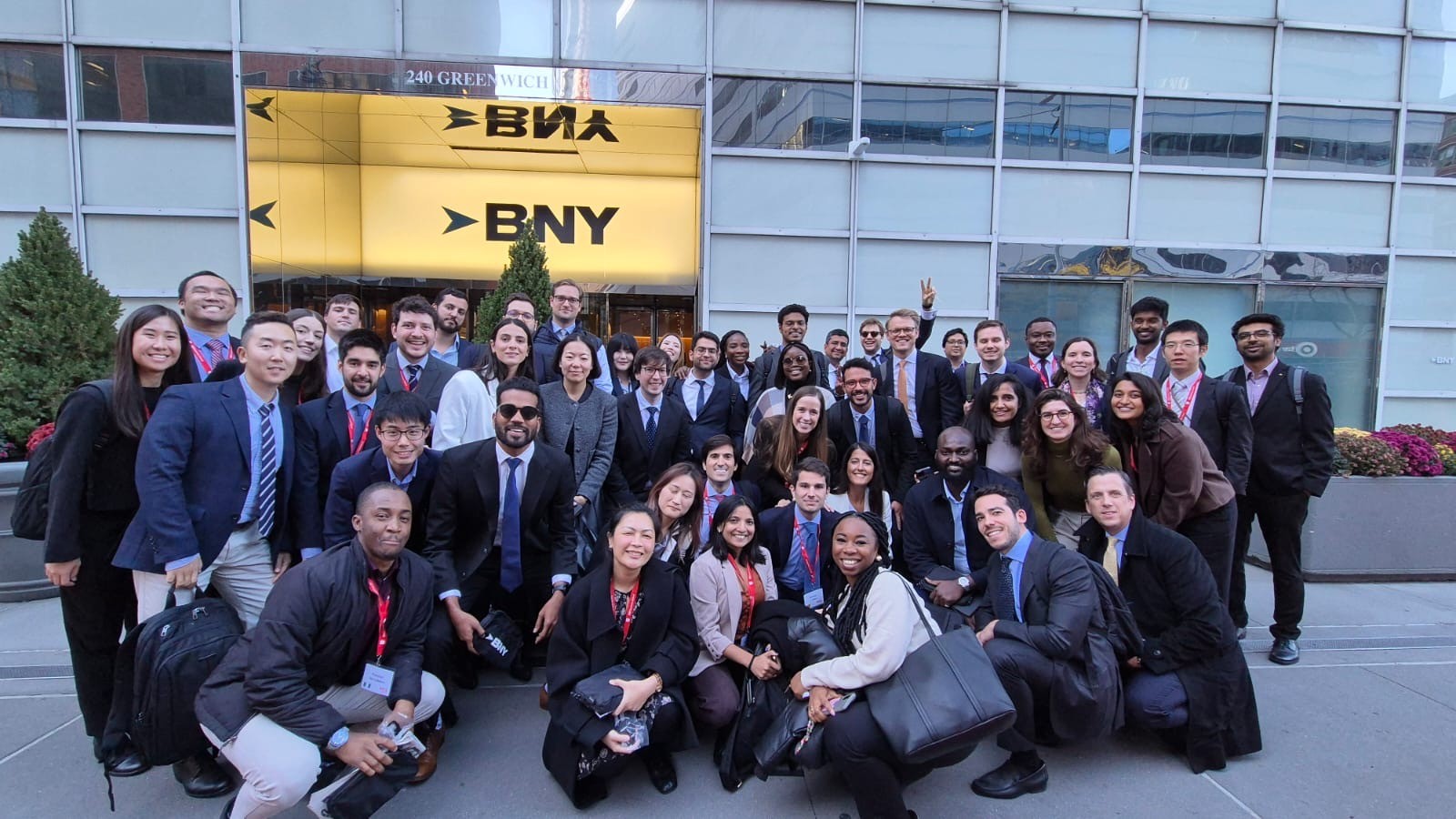
New York International Module: learning about global finance while witnessing the U.S. Presidential election firsthand, I was incredibly fortunate to experience both at the same time.
For me, being company-sponsored was therefore not a reason to take the MBA less seriously. It was a reason to use the opportunity differently.
What international experiences had the greatest impact on you?
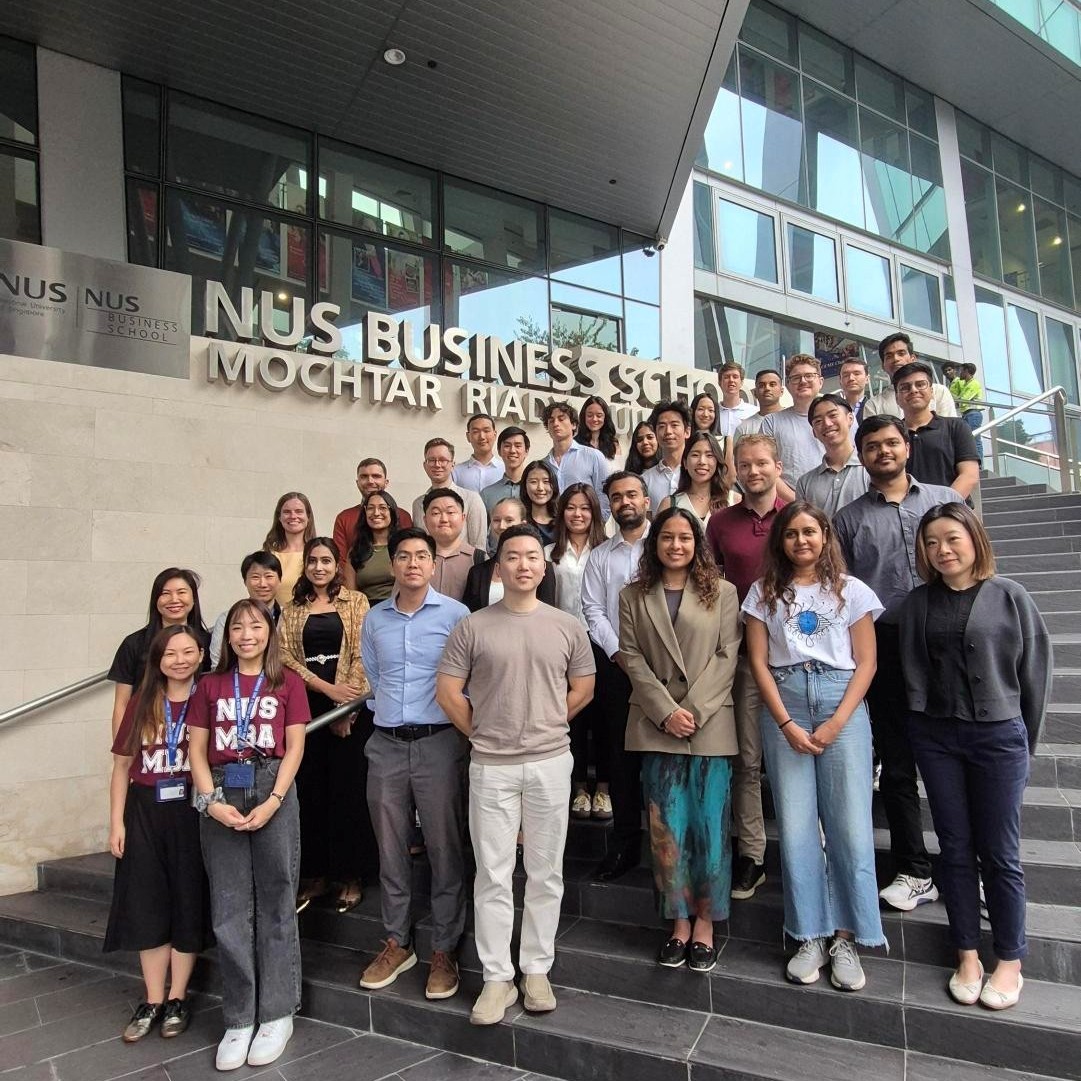
NUS life begins: exploring Singapore’s financial hub and experiencing the diversity of Southeast Asia.
The international opportunities at IESE helped me understand that learning about the world is very different from simply reading about it. During my exchange at NUS, I spent time in Singapore, one of Asia’s major financial hubs. I gained a better understanding of Singapore’s financial ecosystem while also experiencing the diversity of Southeast Asia. What struck me was that geographical proximity does not necessarily mean cultural or institutional similarity. Countries within the same region can have very different cultures, regulatory environments and approaches to business.
This experience encouraged me to think more carefully about how KAMCO’s work might be understood or applied in other Asian markets. It also made me more aware that adapting a business model to another country requires more than simply transferring what works in Korea.
What would you say is the greatest asset you gained from your MBA?
For me, the greatest asset was the people I met and the way they changed how I think. Whenever I encounter something unfamiliar or a difficult problem, I often find myself thinking, “What would someone I know do if they were in my situation?” It is a surprisingly useful habit because I can mentally draw on the approaches of people with very different experiences.
Everyone knows that IESE is a diverse community, but you really understand what that means once you become part of it. Before starting my MBA, I had heard a lot about “peer learning” and wondered what it would actually mean in practice. The answer was in the classroom. In case discussions, I learned not only from what my classmates thought, but also from how they communicated their ideas, built arguments, challenged others and responded when their views were challenged. A classmate from a completely different industry might identify an issue that I had not even considered.
Their professional and cultural backgrounds also encouraged me to think beyond Korea. I began asking myself how KAMCO’s business could work in other countries, what might need to change, and which elements of our experience could potentially be transferable.
Even now, after graduating from IESE, I sometimes find myself thinking, “How would that person have handled this situation?” In a way, I have built an internal network of different perspectives that I can draw on whenever I need to think differently. The knowledge I gained from the MBA will continue to evolve, but the people I met and the way they changed how I think will remain one of my most valuable assets.
What was it like returning to your organization after the MBA?
Returning to KAMCO was an interesting test of whether the MBA had actually changed anything.
The biggest change was not that I suddenly knew how to solve every problem. Instead, I found myself approaching familiar problems with different questions.
Before the MBA, I often started with: “How can I execute this task well?”
After the MBA, I found myself asking:
“Why are we doing this?”
“Who are we creating value for?”
“Is there a better way to allocate our resources?”
“What would this look like from the perspective of another stakeholder?”
The MBA did not give me a formula that I could simply bring back to KAMCO. It gave me a broader toolkit and a habit of connecting different areas of knowledge when approaching a problem.
That has been one of the most practical benefits of the MBA.
What has life been like since graduating from IESE?
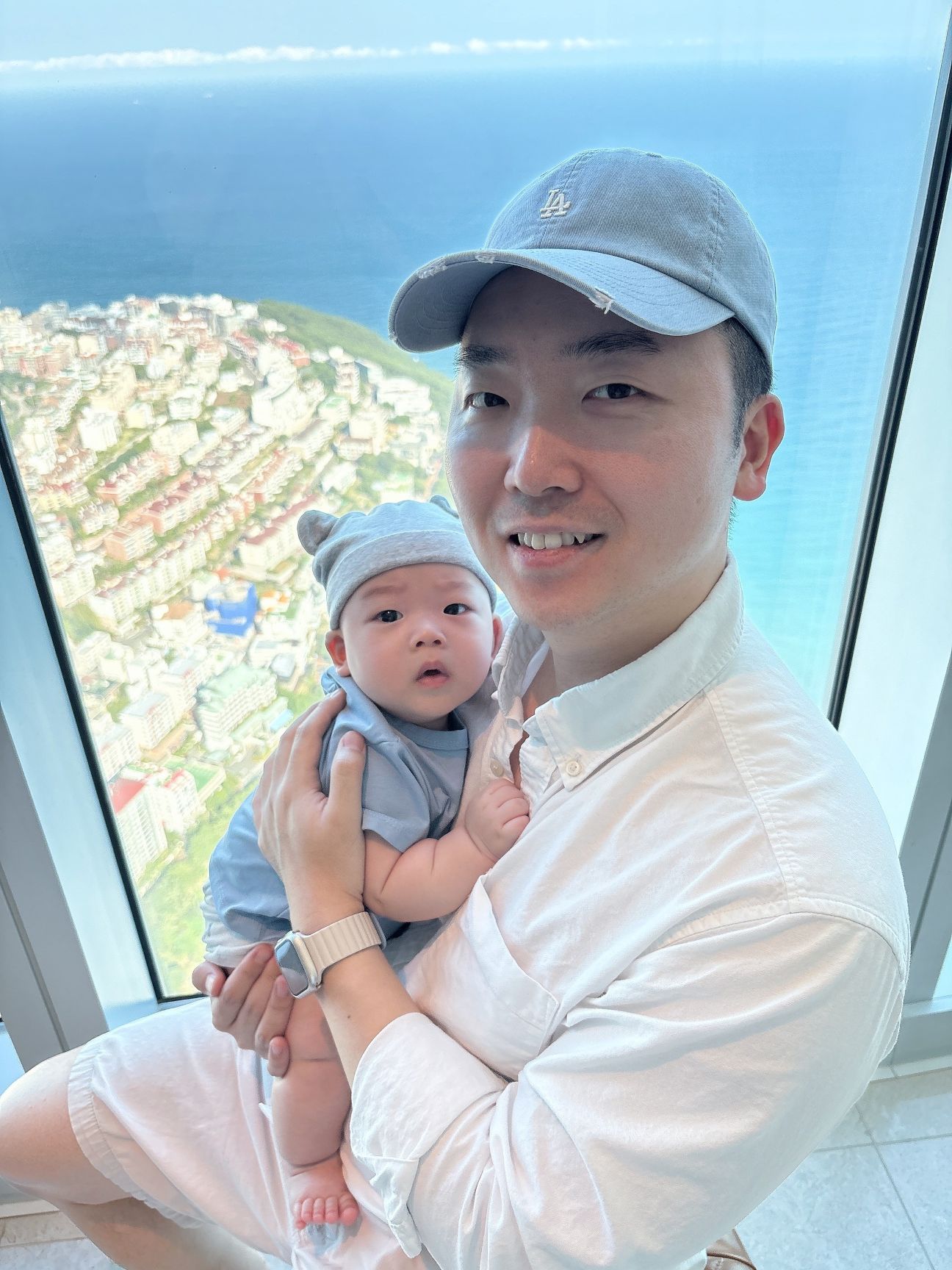 About ten months after returning to KAMCO, my life changed again. My son was born in March 2026, and I am currently taking parental leave. Becoming a father has given me another opportunity to pause and reflect on what I learned at IESE – not only about business, but also about leadership, priorities and long-term thinking.
At IESE, I learned to be more comfortable with different opinions, to question my assumptions and to consider the longer-term consequences of decisions. I believe that mindset is useful beyond the workplace as well.
My MBA journey has therefore become more than a professional experience. It has influenced how I think about my role as a manager, colleague, family member and now as a father.
What advice would you give to future company-sponsored MBA candidates?
First, don’t treat the MBA as a paid sabbatical. Having a job to return to gives you security, but that security should give you more freedom to explore, not less motivation to learn.
Second, deliberately step outside your comfort zone. Talk to classmates from different industries and countries. Take courses that are far from your current responsibilities. Participate in exchanges and international modules. Put yourself in situations where your existing assumptions are challenged.
Finally, make the most of the freedom that company sponsorship gives you. If you already know where your career will continue after graduation, you have a unique opportunity to focus on learning, experimentation and personal growth rather than recruitment.
Looking back, I believe the greatest value of my IESE experience was not learning a particular business formula. It was learning how to connect different areas of knowledge, understand people with completely different experiences, and look at familiar problems in new ways. I went to IESE knowing that I would return to KAMCO. I returned to the same organization, but I did not return as exactly the same professional. And perhaps the most important thing I brought back from IESE was not a set of answers, but better questions.
Pursue your dream MBA! Take these next steps today:


)