
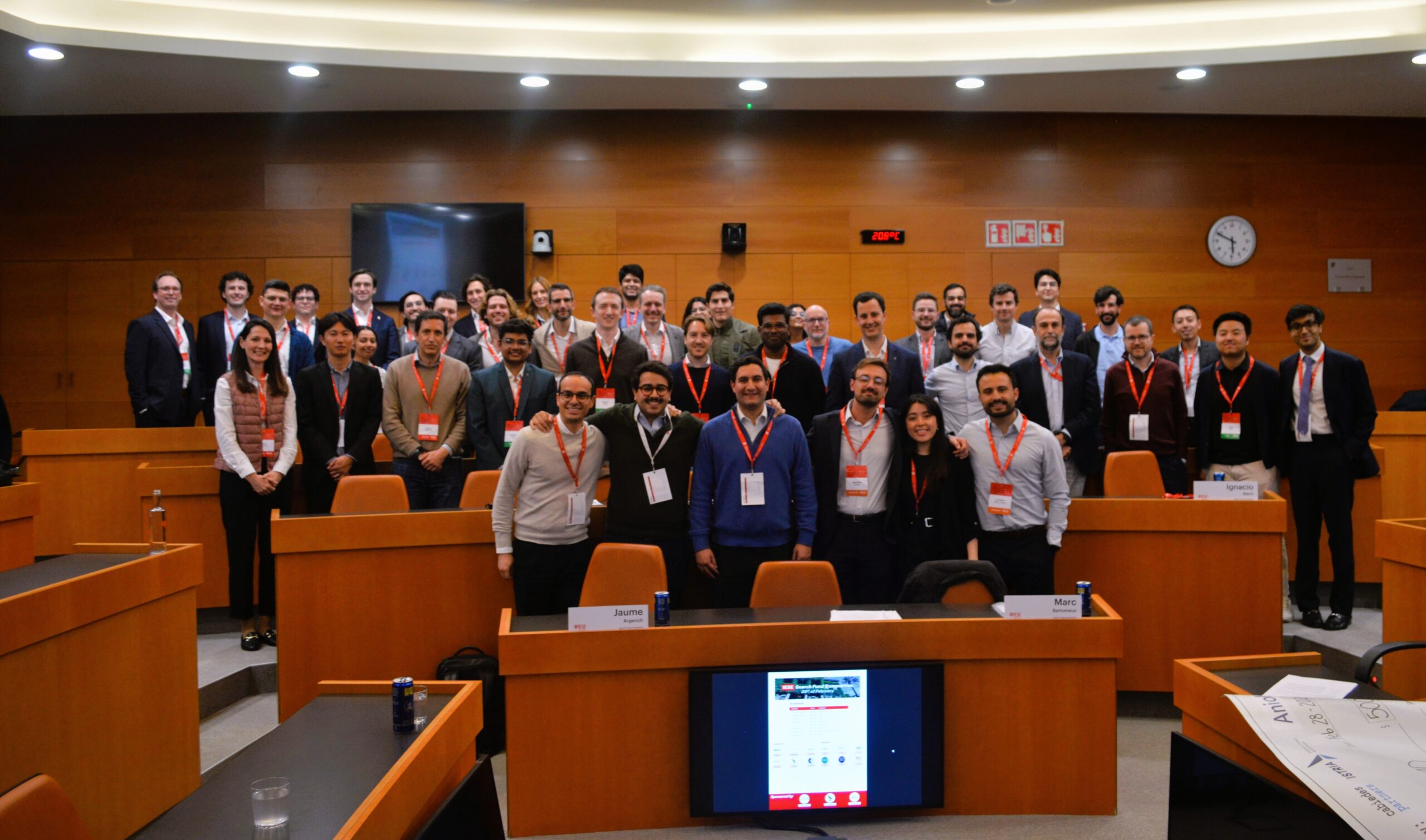
IESE has long been a reference point for search funds in Europe. This year, we wanted to translate that leadership into a hands-on experience.
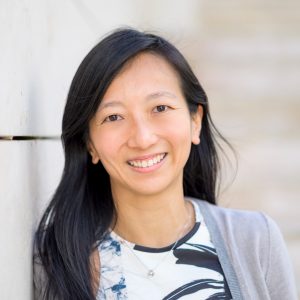
As part of the IESE Search Fund Club management team, I had the opportunity to lead the creation of IESE’s first Inter-MBA Search Fund Competition. What started as a student initiative quickly evolved into a full ecosystem event bringing together investors, operators and MBA students from across Europe.
From Engineering to Entrepreneurship Through Acquisition
Before IESE, I studied information systems engineering in Paris and began my career in Sydney as a full-stack developer at Esker. After two years in Australia, I returned to France and worked as an IT architect, advising large corporations on digital transformation projects.
I had always been drawn to entrepreneurship, but starting something entirely from scratch never felt fully aligned with my personality. Three years ago, I discovered Entrepreneurship Through Acquisition. At first, it seemed counterintuitive. Why would talented professionals leave strong careers to acquire small, traditional businesses?
The more I studied the search fund model, the more compelling it became. It combines ownership and operational leadership with structure and mentorship. You acquire and grow an existing profitable company, backed by experienced investors who support you throughout the journey.
When choosing an MBA, IESE stood out for its deep roots in the search fund ecosystem and the strength of its entrepreneurial community.
Why Launch a Search Fund Competition
IESE has produced numerous successful searchers and maintains strong ties with investors and operators across Europe. Yet as students, we felt there was room to create something that would make that ecosystem tangible.
The idea gained momentum during conversations within the Search Fund Club. A defining moment came during a dinner with José Martín Cabiedes, a well-known investor in the search fund ecosystem. When we shared the concept, he immediately encouraged us to move forward and offered his support. That endorsement gave us the confidence to turn the idea into action.
From the beginning, we wanted the competition to be inter-MBA. Bringing together leading European business schools would elevate both the learning experience and IESE’s position at the center of the ecosystem.
We first organized an internal selection round at IESE. Twelve teams applied, far exceeding expectations and confirming the growing interest in search funds among students. The selected IESE team then competed alongside teams from London Business School, INSEAD, HEC Paris, IMD and ESADE.
The Competition Format
Our objective was clear: replicate the real search fund journey as closely as possible within a single day.
Two real companies previously acquired through search funds were selected as targets. Ahead of the event, teams received financial and operational data and prepared:
• A structured due diligence question list
• A draft Letter of Intent (LOI) for each company
• An investment thesis presentation for each company
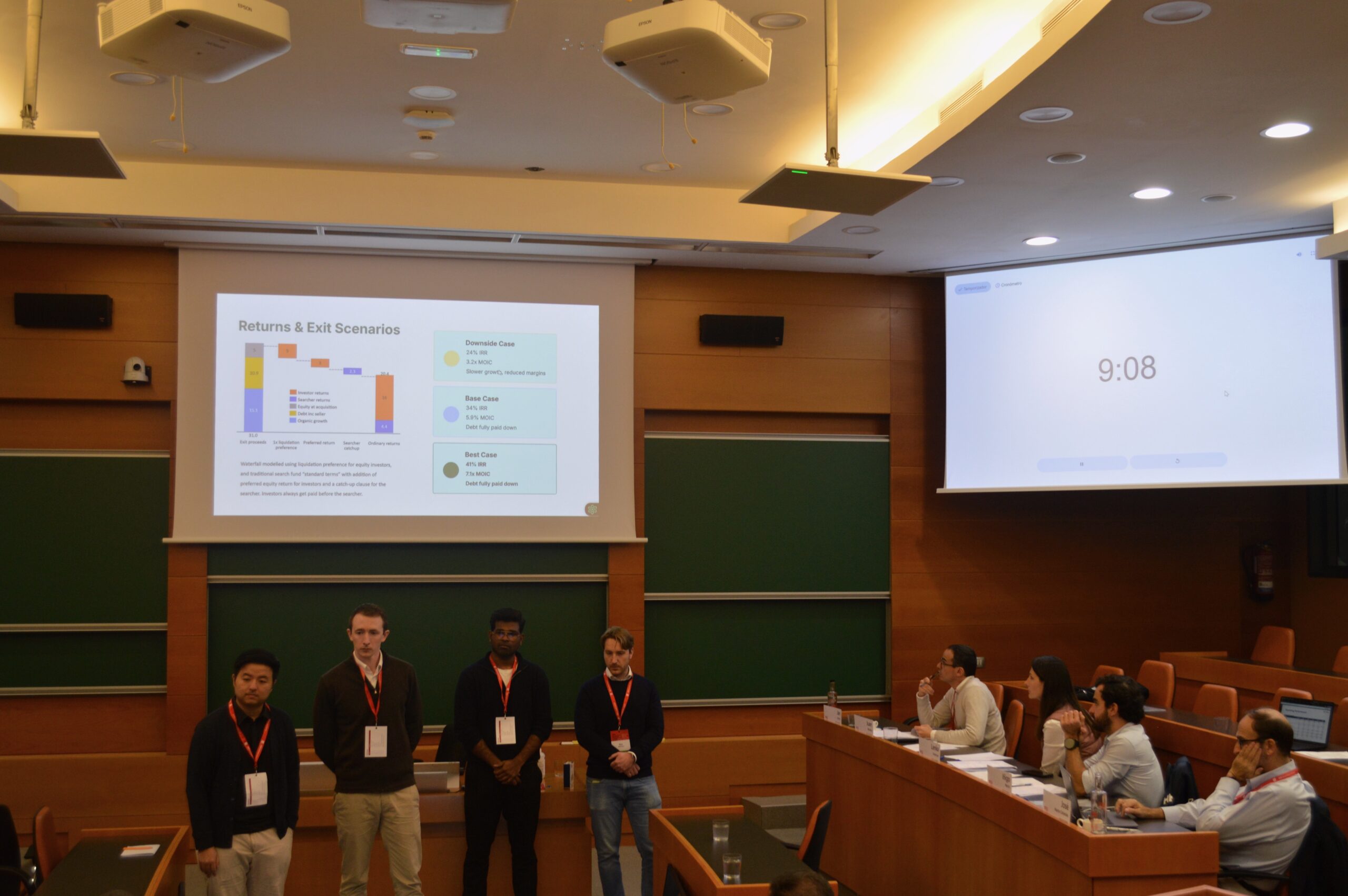
It was an intense day of negotiations, deliberations and evaluations but with plenty of learning!
On competition day, the experience unfolded in four stages.
1. Due Diligence Sessions
Teams met directly with the operators who had acquired and run these companies. David Jacq and Marc Lascorz Florit played the role of sellers. Each brought a distinct profile and negotiation style. Students had to test assumptions, uncover risks and adapt their theses in real time.
2. LOI Negotiation Rounds
Teams negotiated key deal terms with each operator. They defended valuation logic, structure, governance and alignment under pressure.
3. Investment Committee Presentations
Each team presented its preferred acquisition to a panel of active search fund investors. They were challenged on risk assessment, value creation, financing structure and execution capability.
4. Final Deliberation
Judges assessed analytical rigor, adaptability, realism and clarity of strategic thinking before selecting the winners.
This was not a theoretical case study. Students worked with real operators, real data and real investor scrutiny.
Investors and Sponsors
The credibility of the competition rested on the involvement of leading members of the European search fund ecosystem. Our panel of investors included: Lenka Kolarova of Istria Capital, Jan Simon of Vonzeo Capital, Juan Naranjo of the IESE International Search Fund Center, Íñigo Martín and José Martín Cabiedes of Cabiedes & Partners, Jaume Argerich of ANIOL Family office, Ignacio Marin of ALZA Capital Partners, Marc Bartomeus of Albira Investments
They followed the teams throughout the day, observing due diligence discussions, evaluating negotiations and rigorously challenging final presentations. Beyond judging, they actively mentored participants and shared insights from their own investment experience. We are deeply grateful to Istria Capital, Cabiedes & Partners, ANIOL, and Albira Investments for sponsoring this first edition. Their involvement ensured both credibility and depth, and reinforced IESE’s strong ties with the ecosystem.
The Team Behind the Competition
While I had the privilege of leading the initiative, this competition was entirely a collective effort.
The IESE Search Fund Club team carried this project from idea to execution.
Daiki Tsujii, Esteban Setzer, Lety Loza, Rodrigo Tinoco, Vicente Yrízar Garza, Rui Rebelode and Alec Cairney each took ownership of critical areas, from coordinating participating schools and investors to working closely with operators and overseeing communications and logistics. Our Club Presidents, Luis Saucedo and Andres Lince, played an essential role in opening doors across the ecosystem and ensuring we had the right level of support and visibility. I could not have done this without them.
Their reliability, professionalism and commitment turned an ambitious idea into a credible, large-scale event. We are also sincerely grateful to the IESE MBA Office, especially Paula Estrada and Steph Tait, for their continuous guidance and operational support.
The Outcome
After an intense day of analysis, negotiation and presentation, two teams emerged as co-winners: IESE and IMD.
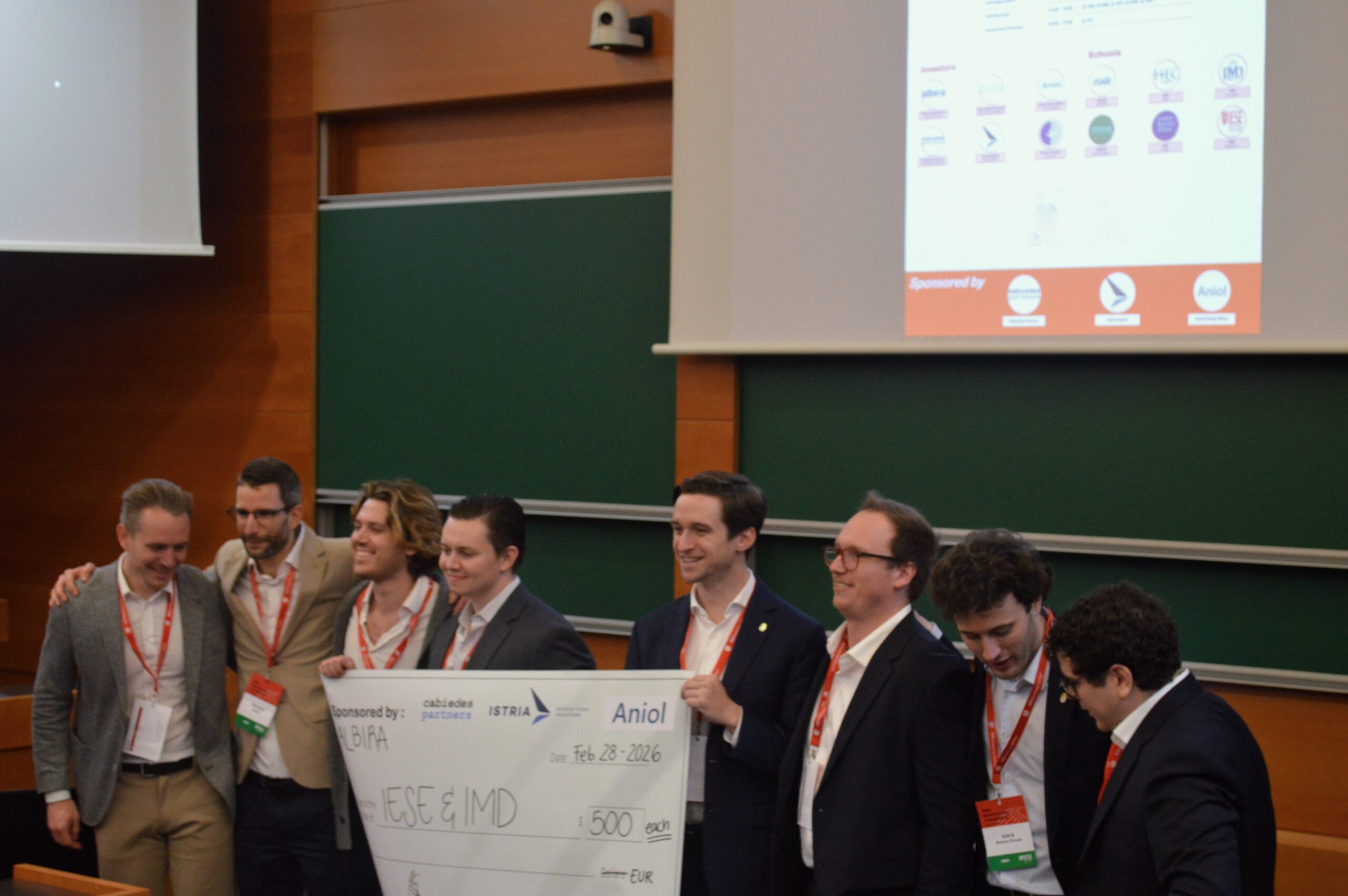
The teams from IESE & IMD emerged as joint winners in the first edition of the IESE Search Fund Competition!
What differentiated them was not only preparation but adaptability. Both teams demonstrated strong financial reasoning, operational understanding and the ability to refine their theses after each interaction with operators.
One particularly memorable moment came when the judges decided to award two full prizes rather than splitting the original amount. Investors themselves stepped in to ensure each winning team received full recognition. It reflected the level of engagement and enthusiasm that defined the day.
Why This Matters for IESE
The strongest feedback from participants was that the experience felt real. Many described it as the closest they had come to living the search fund journey within an MBA program.
For IESE, this competition represents more than a successful event. It demonstrates that the school’s leadership in search funds is not only rooted in faculty and alumni, but actively reinforced by students who build platforms that connect investors, operators and future searchers.
This was the first edition. We are committed to refining and expanding it in the years to come. For me personally, organizing this competition has been one of the defining experiences of my MBA. It reinforced something fundamental about IESE. When you believe in an idea and surround yourself with the right people, you can create initiatives that extend beyond the classroom and contribute meaningfully to an entire ecosystem.
And that is how IESE continues to lead the search fund movement in Europe.
Written by Baptiste Duplan, MBA 2026