
After more than two decades in fashion and retail, Natalia Bori (PMD’25) has launched an independent strategic advisory business. In this interview, she reflects on the move from a corporate career to working with companies on their challenges and opportunities. She also discusses how IESE shaped her approach to business decisions, the pressures facing fashion and retail, and why sustainability needs to be part of everyday choices.
After more than 20 years in fashion and retail, what prompted you to start working independently, and what has been the biggest adjustment?
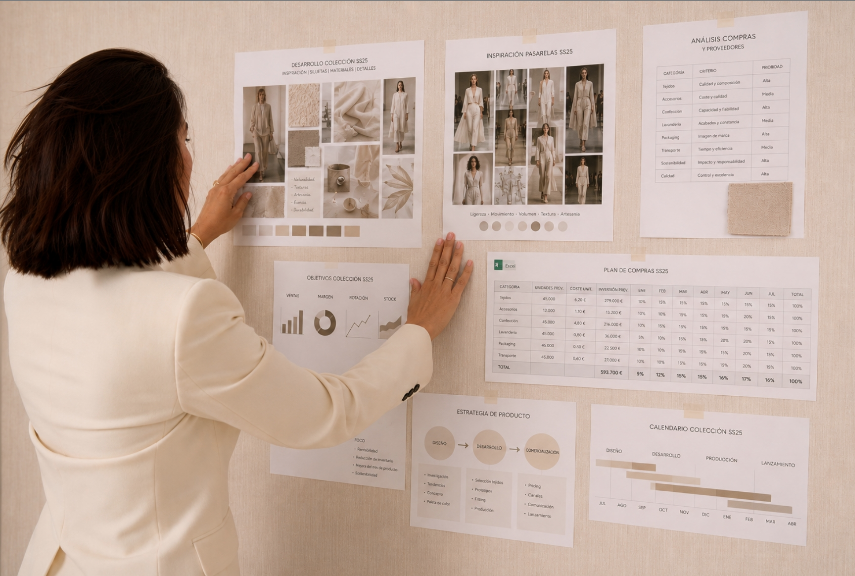
During my PDD at IESE, I began to see my professional experience from a different perspective. After more than 20 years at Inditex and C&A, I realized how much I would enjoy sharing what I had learned and bringing my perspective on the industry to other companies, helping them tackle challenges and explore new opportunities. That was how my strategic advisory business came about.
The biggest adjustment has been moving from a large corporate environment to building something of my own. There is a lot to learn, but working with different businesses and contributing to their development is incredibly motivating.
How did your time at IESE shape the way you approach business challenges?
One of the most valuable things I took away from IESE was the importance of asking the right questions before jumping to solutions. In business, we tend to focus on the most obvious problem: falling sales, rising costs or operational difficulties. But often, the real issue lies somewhere else. Working through cases with people from very different backgrounds helped me question my assumptions and look at decisions from a broader business perspective. It also reinforced something I have always believed: good leadership is as much about developing people and giving them responsibility as it is about making decisions.
What are the biggest challenges you see fashion and retail companies facing today?
The industry is facing pressure on several fronts. Consumers are more price-conscious, shopping habits are changing and competition from global online platforms is intense. At the same time, companies need to adapt to new technologies and become more sustainable. Competing on price alone is increasingly difficult. Brands need to give customers a reason to choose them, whether through their products, quality or the shopping experience. AI can help improve forecasting, planning and inventory management, but it won’t solve every problem. For me, the priority is building businesses that are efficient, commercially distinctive and sustainable in the long term.
The EU is developing digital product passport requirements for textiles. What will companies need to change in how they collect and share product information?
The Digital Product Passport will bring greater transparency to the industry, helping verify sustainability claims and support repair, reuse and recycling. But the challenge goes beyond collecting product information. Companies will need to coordinate data across suppliers, agree on common standards and ensure their systems can communicate with each other. With new regulations on extended producer responsibility and eco-modulation, the pressure to manage reliable information will only increase. From my experience, many companies are not yet prepared for this level of complexity. The priority should be building connected systems that support compliance without creating unnecessary complexity.
IESE aims to develop leaders who have a deep and lasting impact. What does it take for fashion and retail leaders to make sustainability a strategic priority, not just a compliance requirement?
Fashion has a significant environmental impact, and I believe we need to look beyond measuring emissions and recycling waste. Of course, both matters. But shouldn’t we also be asking why we generate so much waste in the first place? Many decisions affecting sustainability are made before a garment is even produced: what we develop, how much we buy, which materials we choose and where we manufacture. Better planning, more responsible sourcing and reducing unnecessary production can benefit both the environment and the bottom line. For me, sustainability becomes strategic when it is part of everyday business decisions.
What advice would you give to someone considering entrepreneurship after many years in a large company?
I would say trust your experience, but be prepared to learn a lot of new things. After many years in a large company, you have built knowledge, judgement and relationships that are incredibly valuable. But starting your own business is a very different experience. Suddenly, you’re responsible for decisions and tasks that were previously handled by entire teams. It’s important to understand what you can genuinely offer and be willing to test your ideas. And don’t wait until you have everything figured out. Sometimes you need to take that first step and learn along the way.
 ⚡ Now, for the speed round
What do you enjoy doing in your free time?
Of course, spending time with family and friends, I love kayaking and, when the season comes, going mushroom picking with my father.
What are you reading, watching or listening to these days?
I enjoy 1.99 Retail and The Business of Fashion Podcast.
What’s something that always gives you energy?
Meeting people who are passionate about what they do. I love conversations that bring fresh perspectives and make me think differently.
Is there a place you always love returning to?
A Illa de Arousa, a small island in Galicia where nature takes center stage. The sea, the landscape and the feeling of slowing down.
What’s one lesson you’ve learned that stays with you?
Early in my career, a manager told me: ” Always be the ant, never the grasshopper” I’ve never forgotten that lesson about consistency, preparation and hard work.